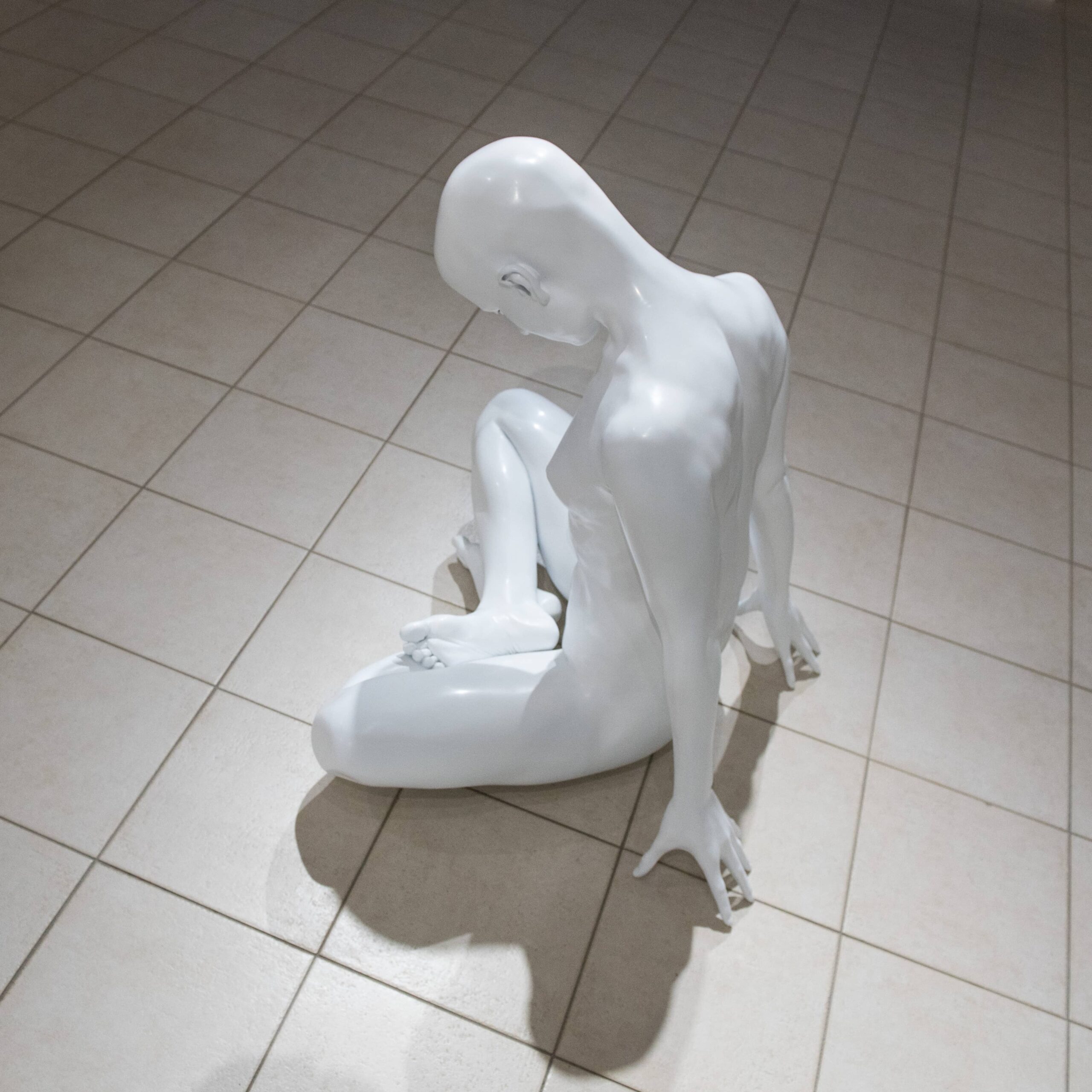
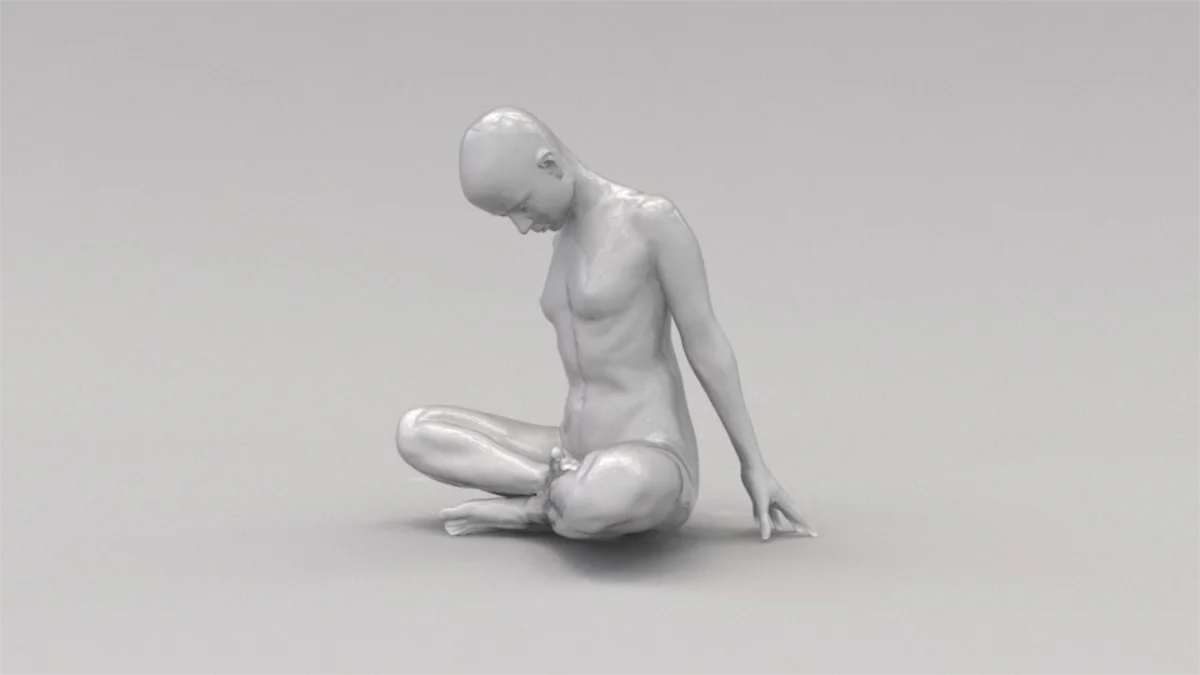
The Levitation II

The Levitation II, 2005

polyester, fiberglass, acrylic, stainless steel, steel

47,5 x 35 x 34 cm

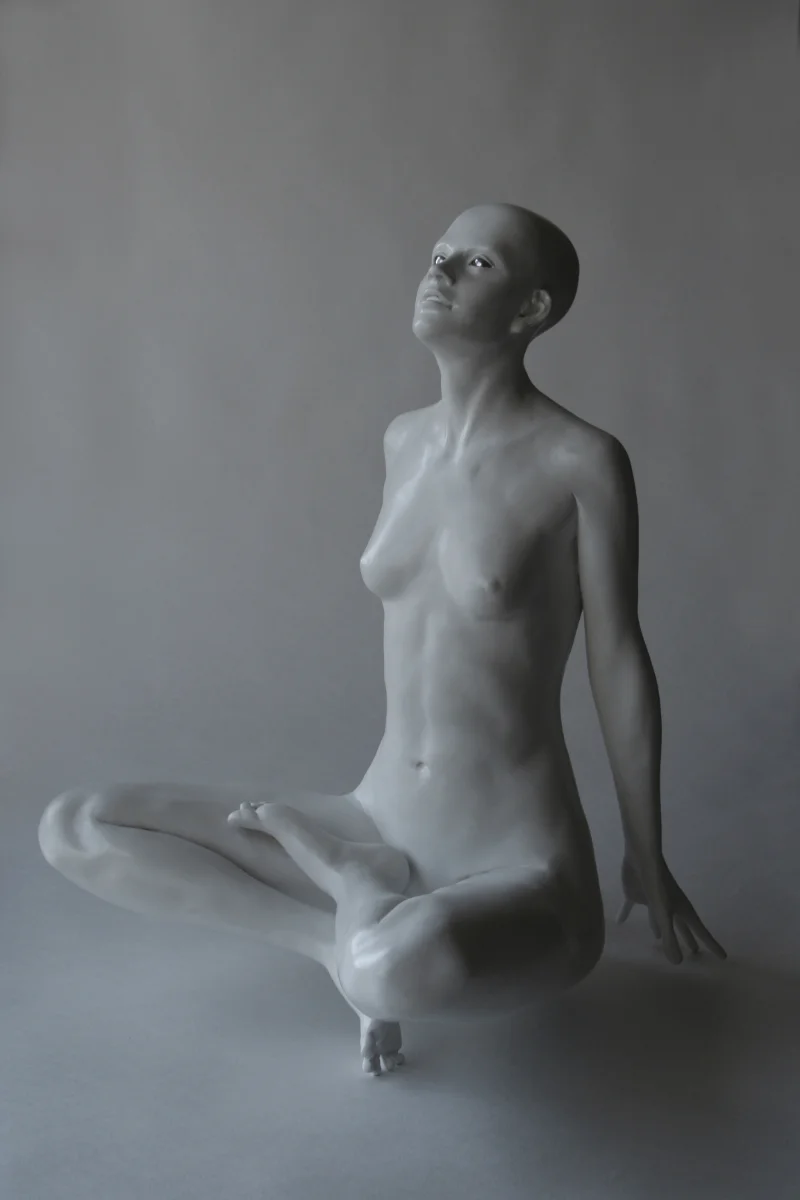
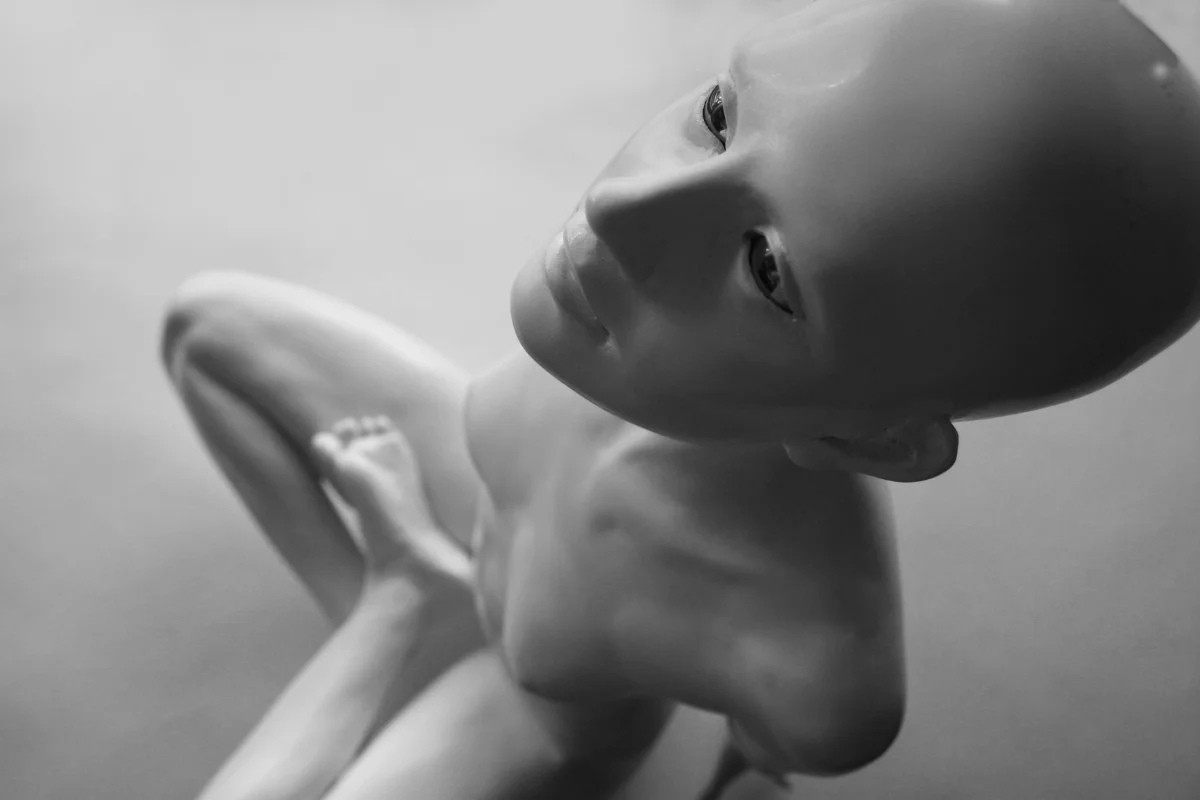
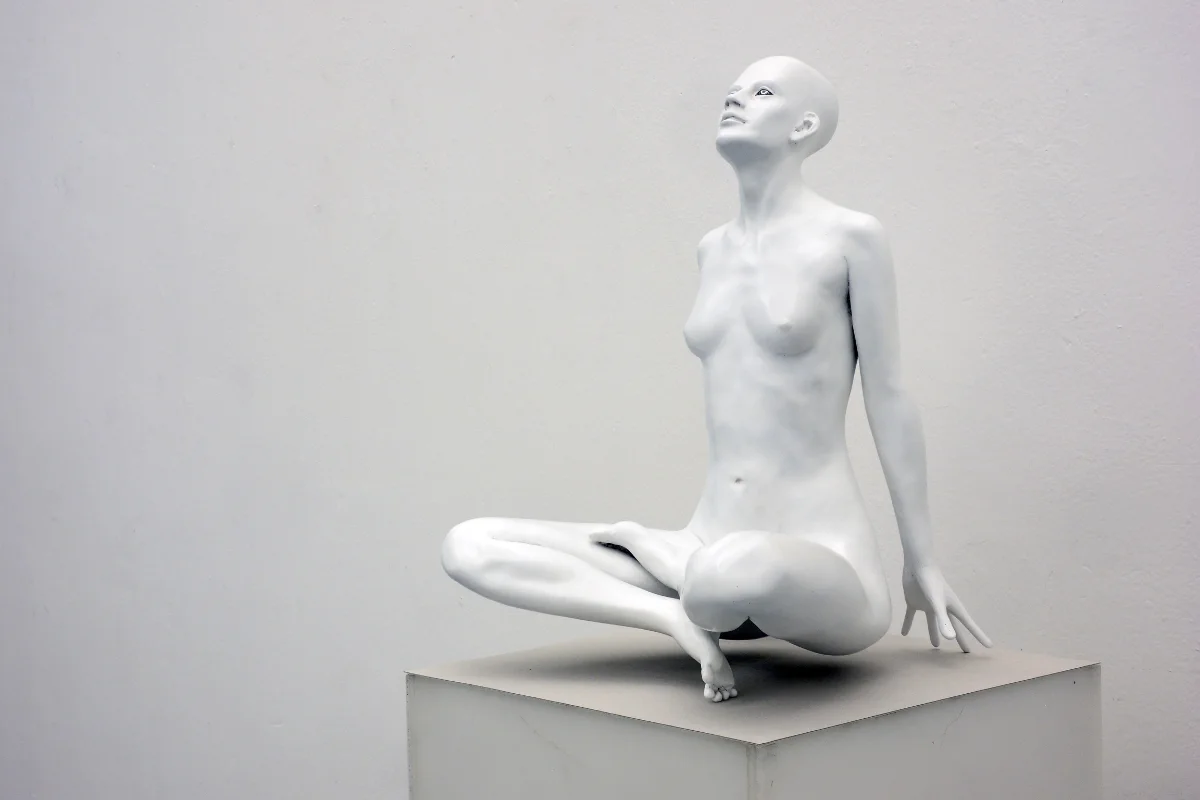
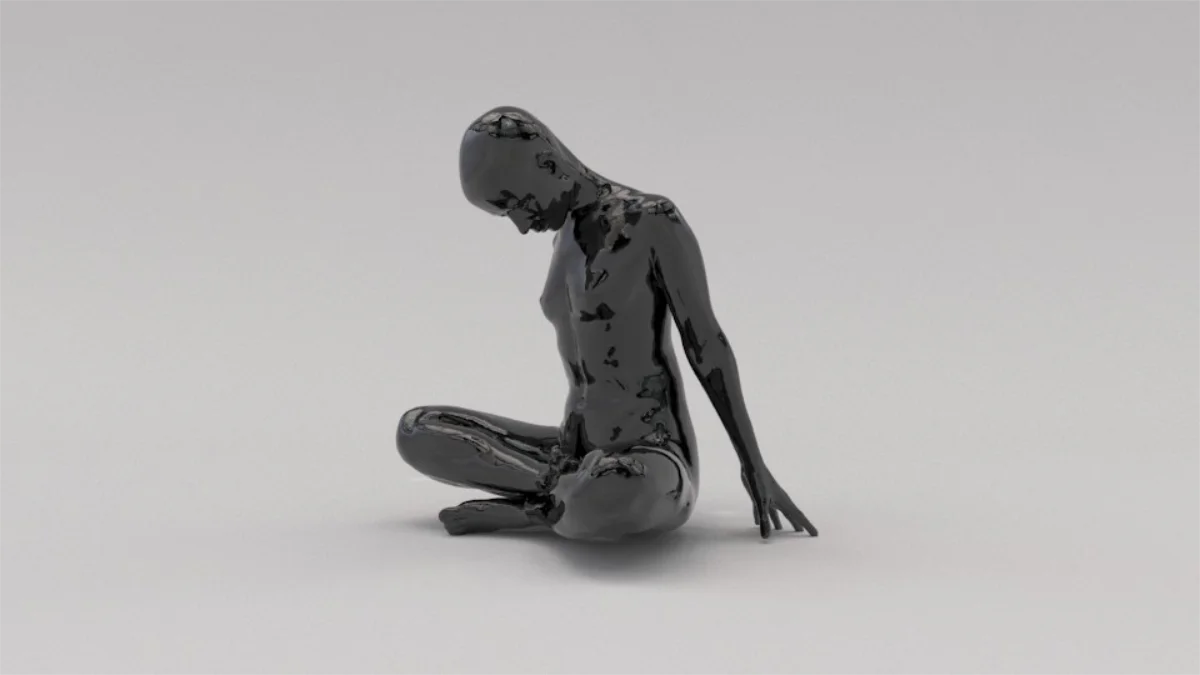
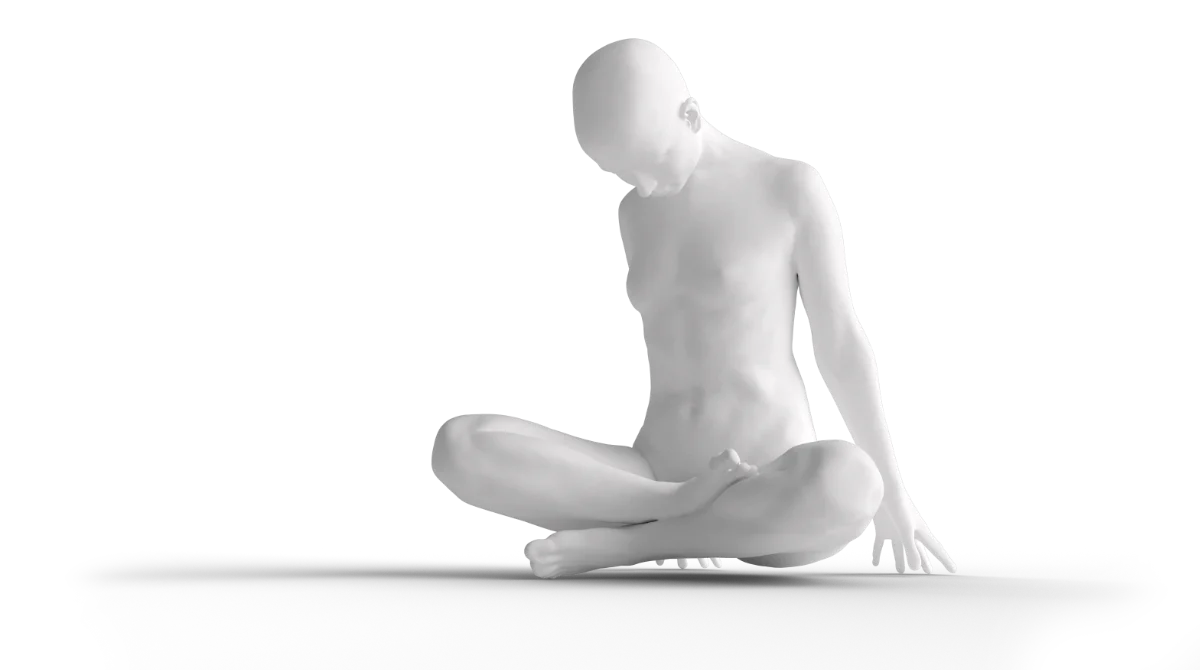
Levitation II – a small variant of the Levitation statue, which, unlike Levitation I and Levitation III, faces upwards. This composition also presents a seated statue of a girl in the lotus position, which was shaped into a modified composition by the creative process and creates the impression of floating (levitation) by touching the ground with only two fingers of the hands and the little toe of the foot. It is not about reconciliation and release, as in other versions of this sculpture, but an expression of hope and determination. The statue is accompanied by a gentle smile and stainless steel eyes. In the eyes of the statue the viewer sees himself in a distorted reality. This is my second monochrome sculpture and the first in pure white.

The Levitation Ib – White

The Levitation Ib - White, 2005

polyester gel, fibreglass, glass/porcelain

79,5 x 73 x 63 cm

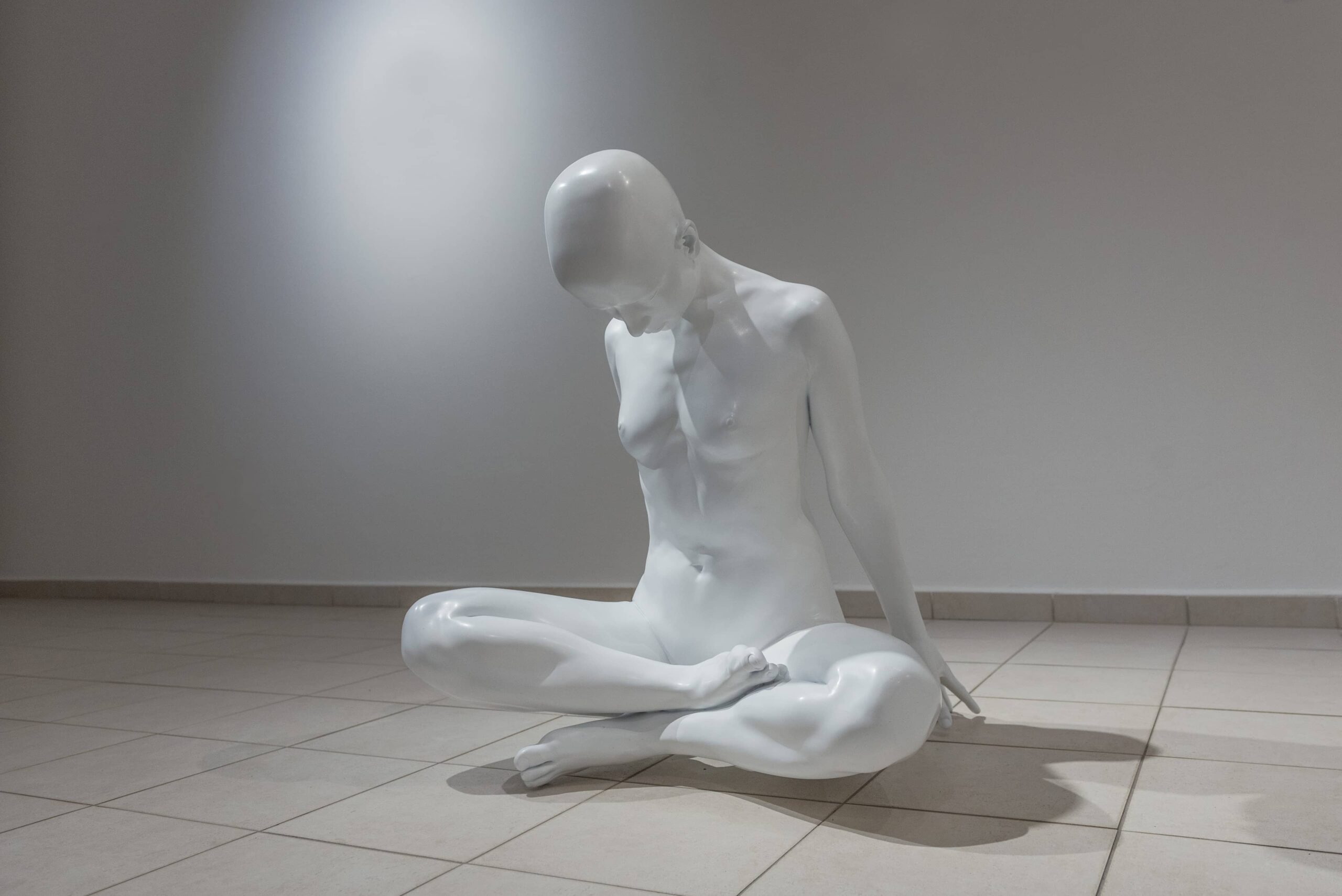
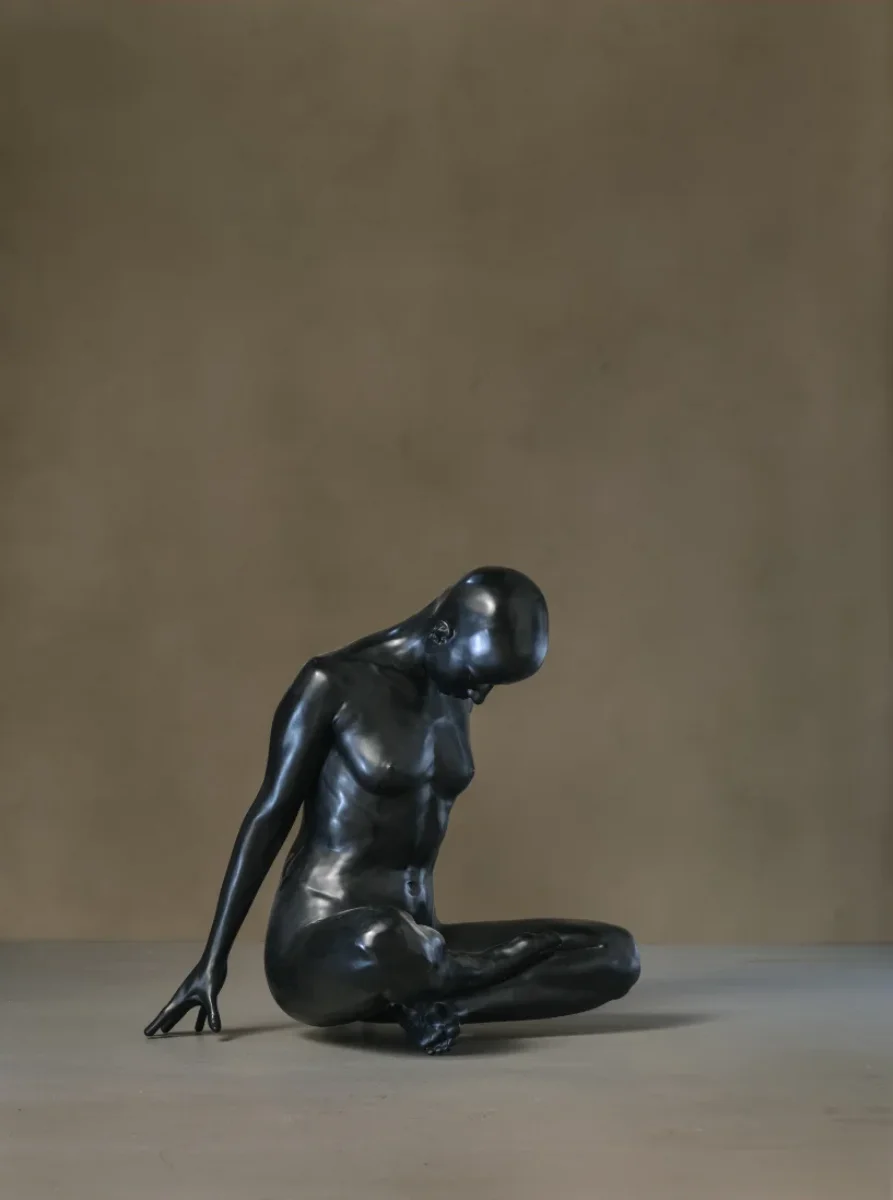
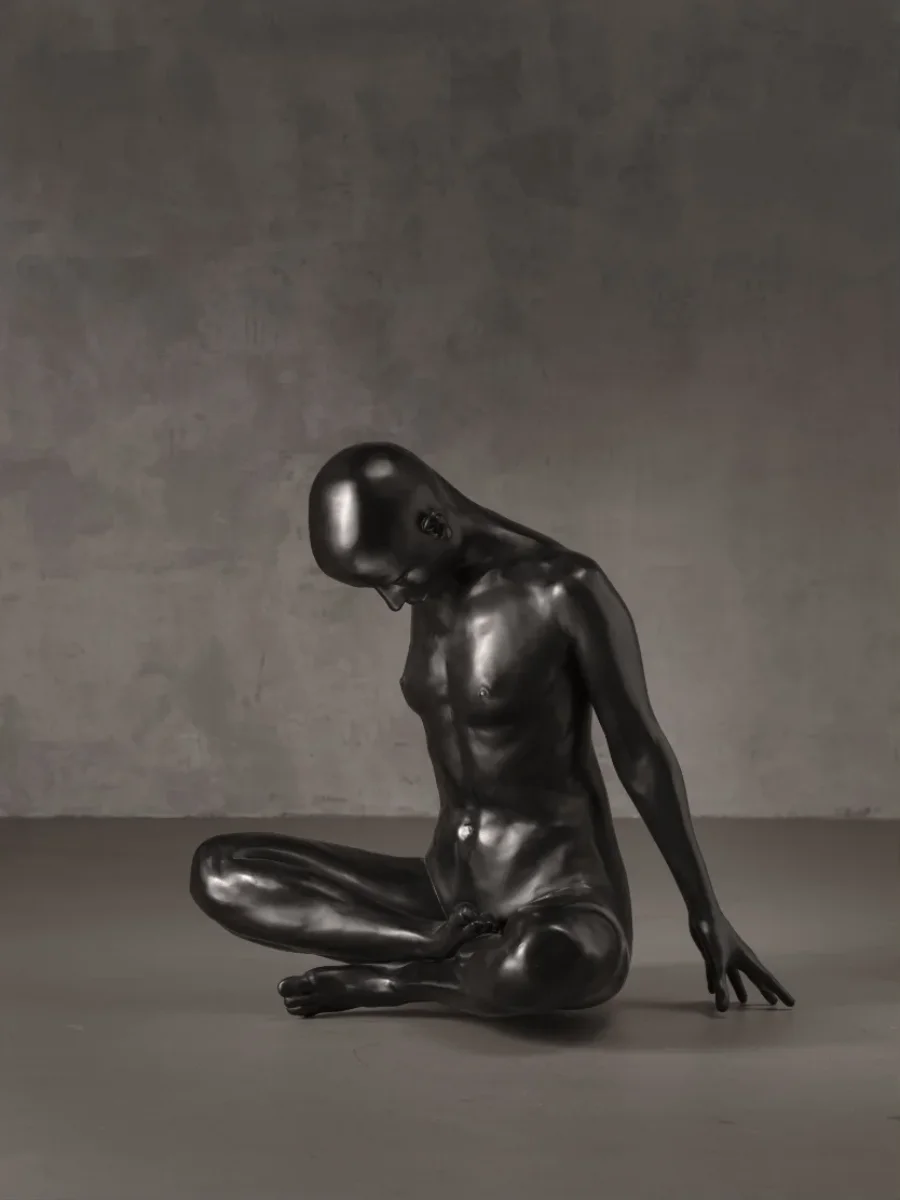
The Levitation I – the first version of Levitation sculpture, a woman in the lotus yoga position, which is creatively shifted into an altered composition and creates the impression of floating (levitation) by touching the ground only at a few points – the little toe of one foot and a few fingers of the left and right hand. There is free space under the figure that can be looked into. Statue is in life size. Two versions of this sculpture – black version and white versions. Eyes are from glass or porcelain.

Photos: Michal Horák

Levitace Ib

The Levitation I

The Levitation I, 2005

polyester gel, fibreglass, glass/porcelain

79,5 x 73 x 63 cm

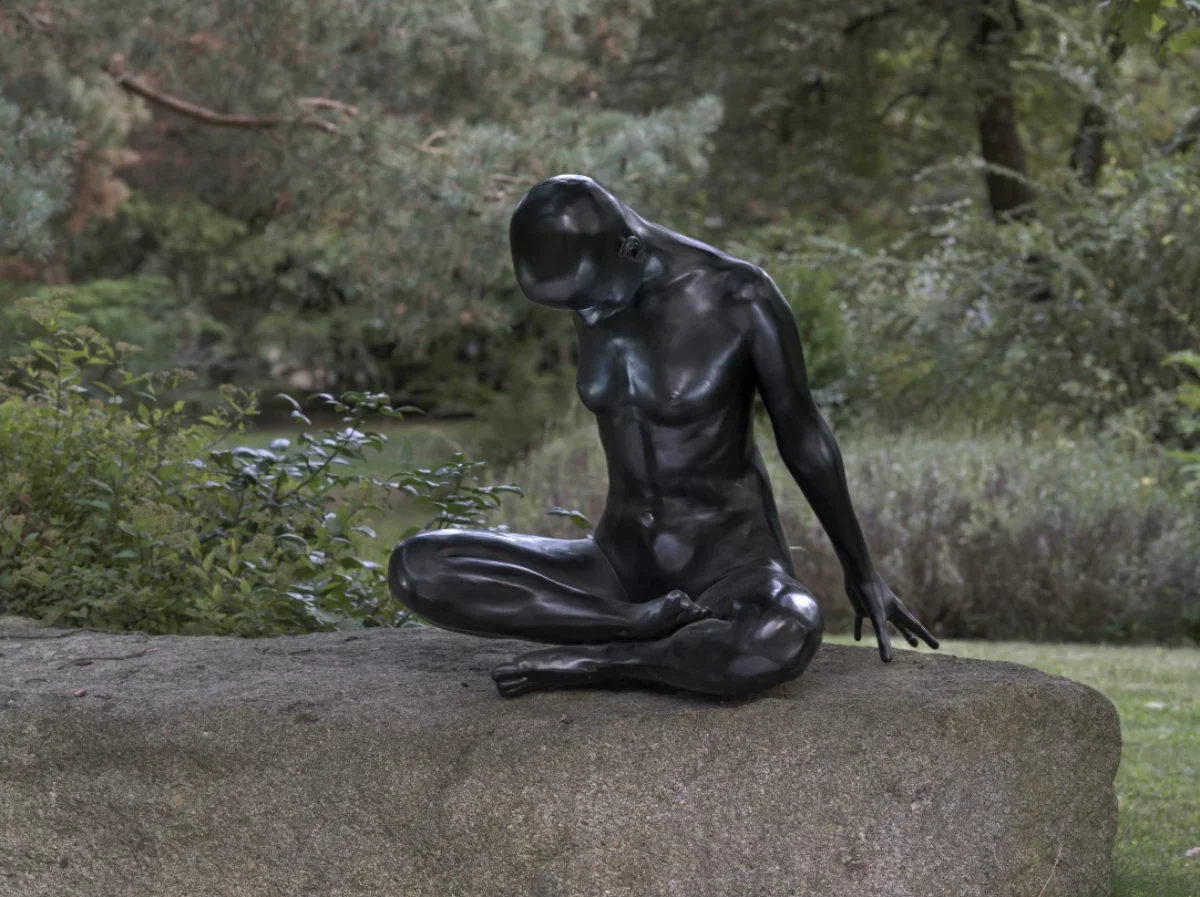
The Levitation I – the first version of Levitation sculpture, a woman in the lotus yoga position, which is creatively shifted into an altered composition and creates the impression of floating (levitation) by touching the ground only at a few points – the little toe of one foot and a few fingers of the left and right hand. There is free space under the figure that can be looked into. Statue is in life size. Two versions of this sculpture – black version and white versions. Eyes are from glass or porcelain.

Photos: Ivan Pinkava

The Levitation III Project

Project Levitation III, 2004

3D scan of the modeled statue

What?

A figure of a meditating woman in a yoga position, touching the ground at only three points – the little finger of one feet and the middle of the left and right hands. Under the figure there is a free space into which you can look (estimated height 2–4 m).

How?

A larger-than-life figure modeled on a steel-wooden structure. It is then shaped and cast from laminate. For its size, the figure is assembled from parts that are finally assembled into a single whole (bolted construction). The color is dark black or white, the eyes are also made of laminate or glass. The structure is anchored with screws into the concrete foundation (it is not a condition due to its size).

Why?

A statue standing in the green or, conversely, in an industrial or panel building, where it will allow local children crawl through the whole body and get to places where they can get a sense of security. “Floating” Woman – a relaxed figure in a position based on ancient Indian yoga – in the position of exhalation. Exhalation position – release – contrast aspiration – expansion. The sensual meaning turns into the meaning of motherhood, tenderness and protection. The opening of the door creating a gap above the floor, here symbolized by the space under the statue. The phenomenon of relief and tension expressed by the space under the object can be described by a metaphor of ajar doors, creating here a small gap between the statue and the floor. Door slightly open challenging to reveal the personal and mysterious dimensions of the next world. Gap – the space under the statue – almost imperceptible touch – represents the personal tension between the figure and the ground on which “everything stands” (over which is “floating”).

The original project, which preceded the later proposal from 2008, when it was already created as part of a public competition for the pre-station area in Ostrava-Svinov. This design won the public art competition and was implemented in 2009–2010.